Table of Contents
Beneath the Sands: The 4,000-Year-Old Kerma Grave and the Forgotten Civilization of Ancient Africa
History does not always arrive with noise. Sometimes, it whispers quietly from beneath layers of sand – waiting thousands of years to be heard again.
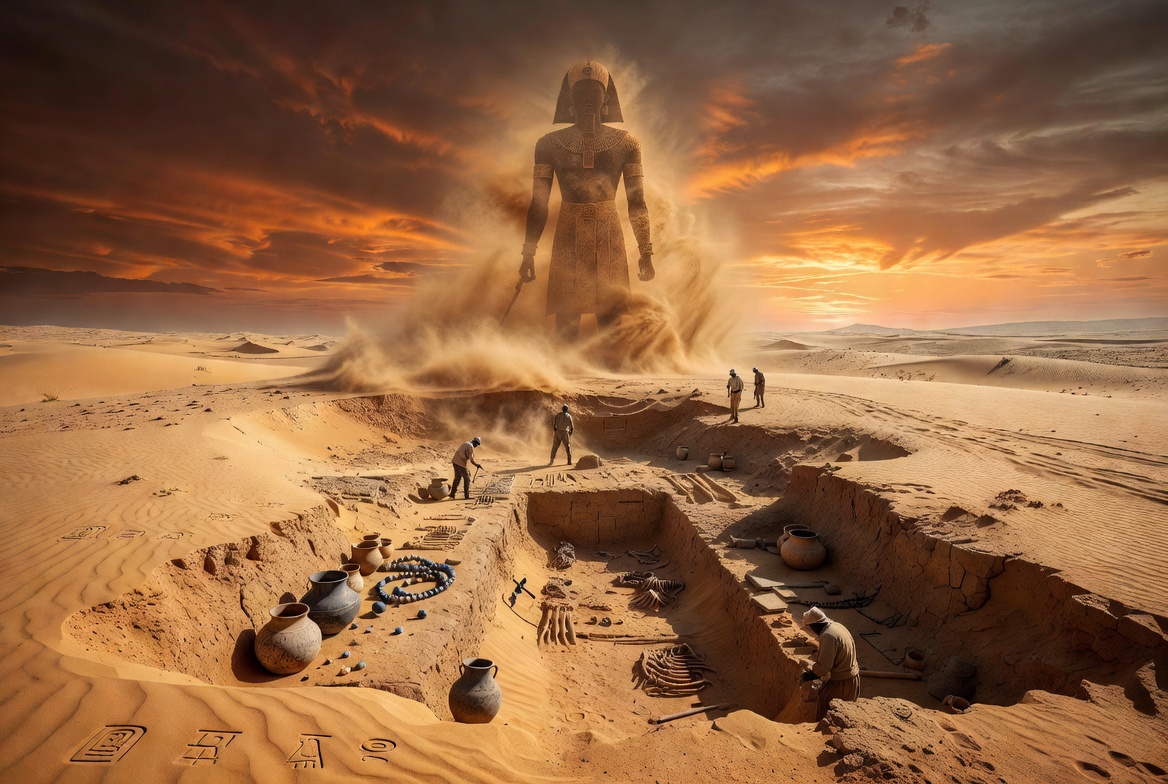
Recently, deep inside Sudan’s harsh and silent Bayuda Desert, archaeologists uncovered a remarkable discovery: a 4,000-year-old grave belonging to the Kerma Civilization. What seemed like a simple burial soon turned into something far more powerful – a doorway into one of Africa’s earliest, richest, and most mysterious civilizations.
This is not just the story of a grave.
This is the story of a forgotten kingdom that once stood shoulder to shoulder with ancient Egypt.
The Discovery in Bayuda Desert
The Bayuda Desert today is dry, rocky, and almost lifeless. But thousands of years ago, this land was very different.
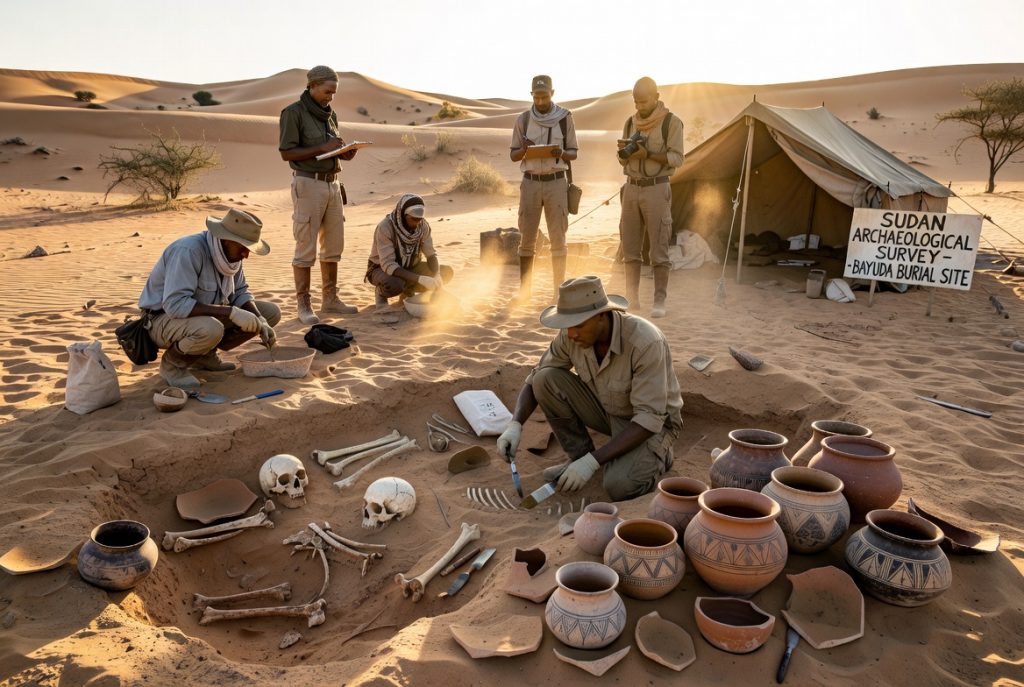
During excavations, archaeologists discovered the burial of a middle-aged man, carefully placed in a grave dating back to around 2000 BC – the height of the Kerma Civilization.
Inside the grave, researchers found:
- Finely crafted pottery vessels
- Blue-glazed beads placed near the body
- Burnt grains, plants, and wooden fragments
- Animal bones and ash from ritual fire
- Remains suggesting a ceremonial funeral feast
One ceramic container contained charred organic remains – possibly leftovers from a ritual fire or offering ceremony. This kind of burial practice has never been documented before in Kerma culture, making it a deeply mysterious find.
Instead of a simple burial, this appears to have been a ritualistic funeral ceremony, possibly performed for someone of spiritual or social importance.
A Lost Green World Beneath the Desert
The discovery revealed something surprising: Bayuda was once fertile and alive.
Plant remains, grains, and insect traces found in the grave suggest that 4,000 years ago, this region may have been savanna-like, supporting vegetation, wildlife, and human settlement.
Over thousands of years, climate change gradually turned this landscape into desert. This grave is therefore not only evidence of ancient culture – it is also proof of ancient environmental transformation.
The Kerma Civilization – Africa’s Forgotten Power
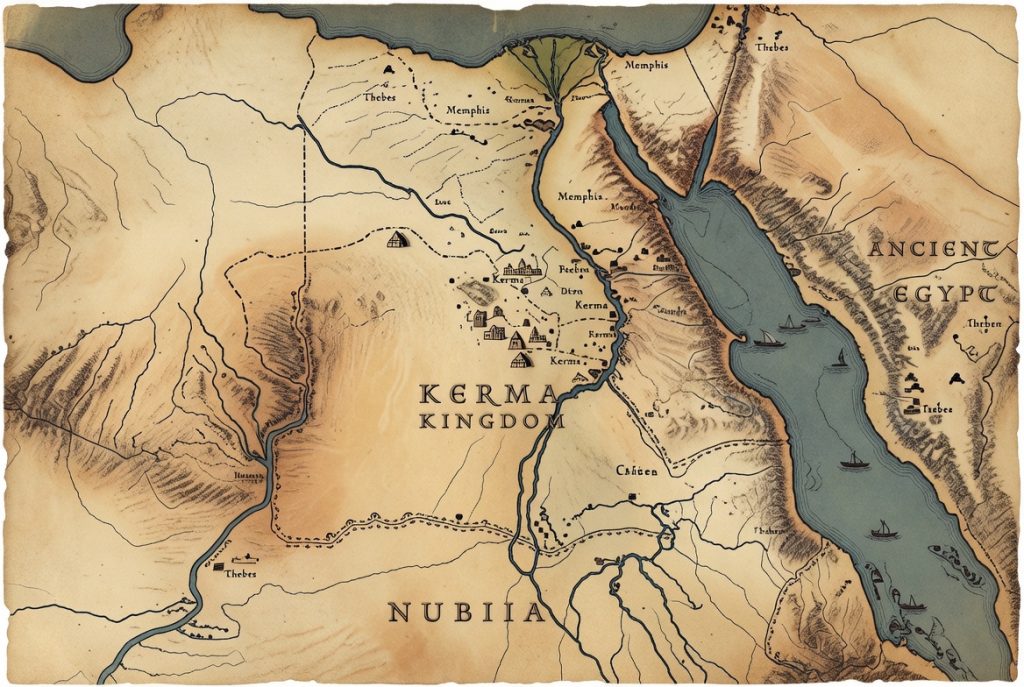
To understand why this discovery matters, we must travel back to the rise of the Kerma Kingdom.
The Kerma Civilization began around 2500 BC in Nubia (modern Sudan) and lasted nearly 1,000 years. It was one of Africa’s earliest urban and politically organized societies.
Despite its power, Kerma is often overshadowed by Egypt in mainstream history – but in reality, it was one of Egypt’s greatest rivals.
Kerma vs Egypt – Rivalry of Two Ancient Powers
Kerma and Egypt shared a long and complex relationship.
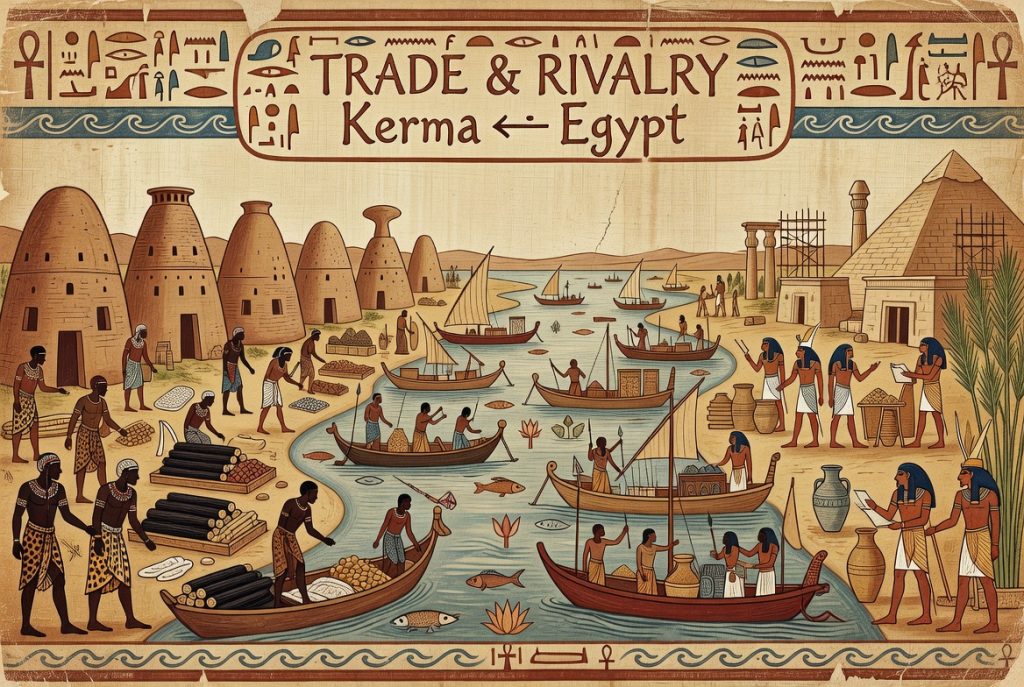
Trade and Wealth
Kerma controlled important Nile trade routes and exported:
- Gold
- Ivory
- Ebony wood
- Cattle
- Exotic African goods
Egypt depended heavily on Nubian resources, especially gold.
Military Conflict
At times, Kerma was strong enough to challenge Egyptian expansion. Egyptian records describe Nubia as wealthy and powerful, not weak.
Some historians believe Kerma may have even temporarily dominated parts of southern Egypt during certain periods.
This was not a primitive society – it was a major political force.
Life Inside the Kerma Kingdom
Kerma was not only powerful — it was sophisticated.
Cities and Architecture
Kerma built large urban settlements and massive mudbrick structures called Deffufa — some of the oldest monumental buildings in Africa.
These structures served religious, administrative, and ceremonial purposes, proving Kerma had:
- Organized labor
- Skilled engineering
- Centralized governance
Society
Kerma society was hierarchical:
- Kings and royal elites
- Priests and ritual leaders
- Traders and craftsmen
- Farmers and cattle herders
Cattle symbolized wealth, power, and social status.
Death, Afterlife, and Spiritual Beliefs
The newly discovered grave provides powerful insight into Kerma spirituality.
Kerma people strongly believed in life after death. Burials often included:
- Jewelry and personal items
- Food offerings
- Pottery and symbolic objects
- Animal sacrifices
- Ritual ceremonies
Royal tombs were massive – sometimes containing hundreds of human and animal sacrifices meant to accompany the king into the afterlife.
But the Bayuda grave is different.
Instead of sacrifice-heavy burial, it shows ritual fire, ceremonial remains, and funeral feast evidence, suggesting a spiritual ceremony rather than pure mourning.
This reveals diversity in Kerma funeral traditions, something archaeologists did not previously understand.
The Mystery of the Ritual
Why was this burial different?
Researchers propose several theories:
- The man may have been a ritual or spiritual figure
- The fire could symbolize purification or transformation
- The feast may represent celebration of life, not just death
- It could represent a rare or local ceremonial tradition
Because similar burials are extremely rare, this discovery could reshape our understanding of Kerma culture.
The Fall of Kerma
Around 1500 BC, Egypt’s New Kingdom expanded south and conquered Kerma.
The independent kingdom collapsed, but its culture did not vanish. Later Nubian civilizations like Napata and Meroe inherited Kerma’s legacy and would later challenge Egypt again.
Kerma was not erased — it evolved.
Global Perspective – Why This Discovery Matters
For centuries, global history focused heavily on Egypt, Greece, and Mesopotamia, often ignoring ancient African civilizations.
Discoveries like the Bayuda grave remind the world that:
- Africa had advanced civilizations thousands of years ago
- Nubia was a center of trade, wealth, and culture
- Ancient African societies were complex and spiritually rich
- History is broader than traditional narratives
This discovery contributes to rewriting global understanding of early civilizations.
Human Story Across 4,000 Years
At its heart, this discovery is deeply human.
Four thousand years ago, someone lived, believed, loved, feared death, and was honored in a ritual ceremony — just like humans today.
The grave is silent.
But its story speaks across millennia.
History is not gone.
It is buried — waiting to be rediscovered.