Introduction: A World in Miniature
Imagine a canvas the size of your palm—yet within it, kingdoms rise, lovers meet in moonlit pavilions, gods descend from skies, and wars are waged in regal silence. That’s the magic of Indian miniature paintings—tiny masterpieces that once adorned the walls, albums, and hearts of Mughal and Rajput courts. This blog takes you through their origin, evolution, cultural resonance, and how they continue to inspire artists worldwide today.

Origins and Evolution: From Palm Leaves to Imperial Albums
Indian miniature painting is a rich tapestry woven over centuries. Its earliest roots trace back to the 6th–7th century palm-leaf manuscripts in eastern India, where Buddhist and Jain monks illustrated religious texts with intricate detail and devotion. These small-scale artworks served as spiritual guides and educational tools.

The art form flourished magnificently under the Mughal Empire (16th–18th centuries) and Rajput kingdoms, each developing unique schools and styles:
- Mughal miniatures, influenced by Persian artistry, introduced fine brushwork, realistic portraiture, and architectural precision. These paintings often documented historical events, royal biographies, and natural studies.
- Rajput paintings, especially from Rajasthan and the Himalayan Pahari regions, leaned toward romanticism, spirituality, and vibrant storytelling drawn from Indian epics like the Ramayana and Bhagavata Purana.
Art historian B.N. Goswamy aptly remarks:
“Miniature paintings do not speak—they whisper. But within those whispers lies a world of cultural memory, courtly life, and divine love.”
Why They Were the Rage: Court Culture and Patronage
In Mughal and Rajput courts, miniature paintings were far more than decoration they were symbols of power, prestige, and cultural identity.

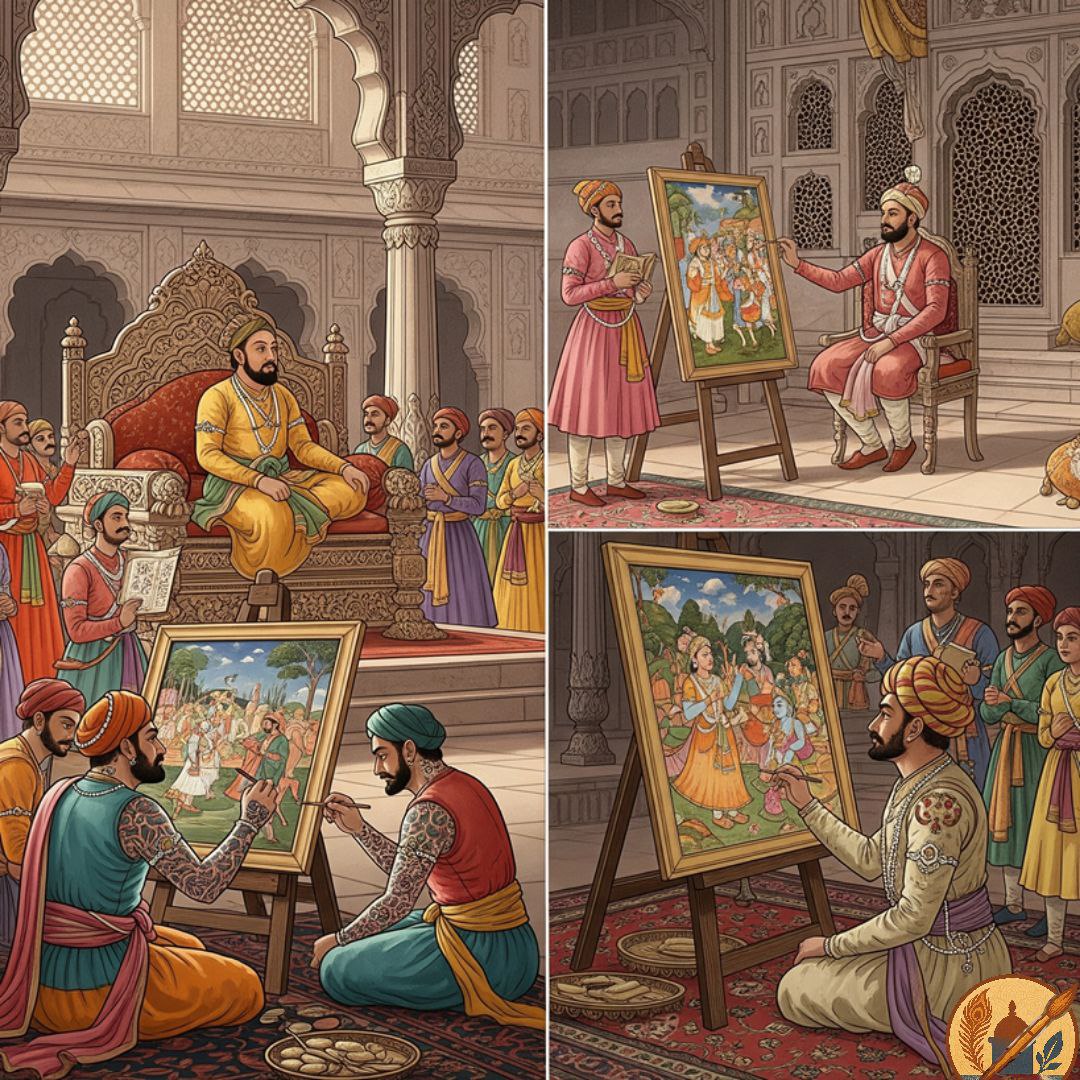
Mughal emperors such as Akbar, Jahangir, and Shah Jahan commissioned artists to capture royal hunts, battles, and daily court life, as well as botanical and zoological studies. These paintings served as visual chronicles and political propaganda.
Rajput rulers of Mewar, Marwar, Bundi, and Bikaner patronized miniatures as a divine language, bringing to life epics, legends, and devotional themes with intense emotion and vivid color.
These artworks represented:
Prestige and piety — affirming the ruler’s divine right and devotion.
Emotional expression — conveying love, heroism, and spiritual ecstasy.
Political recordkeeping — documenting significant events and legitimizing rule.
Romantic idealism — breathing life into mythological and historical narratives.
Global Perspective: How the West Fell for Miniatures
European travelers and colonial officers from the 17th century onward were captivated by the finesse of Indian miniatures. Figures like Francois Bernier and Thomas Roe admired their detail and storytelling.

Hundreds of miniatures were transported to Europe, enriching the collections of museums such as the British Museum, Victoria & Albert Museum (London), Metropolitan Museum of Art (New York), and Musée Guimet (Paris). These works regularly feature in international exhibitions and auctions, celebrated for their intricate technique and deep historical context.
Dr. Milo C. Beach, former director of the Smithsonian’s Freer Gallery, said:
“No art form from the East has left a deeper aesthetic impact on Western connoisseurs than Indian miniatures.”
Schools of Miniature Paintings: Diversity in Detail
Indian miniature painting is a spectrum of regional styles, each reflecting local geography, culture, and spirituality:
|
School |
Characteristics |
|
Mughal |
Realistic portraits, Persian influence, detailed nature studies |
|
Mewar |
Bold lines, dramatic reds, emphasis on royal and religious themes |
|
Marwar |
Folk motifs, local legends, earthy palettes |
|
Bundi-Kota
|
Lush landscapes, royal processions, narrative vibrancy |
|
Pahari |
Poetic, romantic, devotional; Kangra and Basohli schools |

Each school’s distinct visual language captures the “geographical soul and spiritual heart” of its patrons.
The Language of Colour, Line, and Symbol
Miniature paintings were created using natural pigments from minerals, stones, flowers, and insects. Artists painstakingly prepared these pigments, sometimes adding gold and silver leaf to highlight divine or royal elements.

Symbolism was deeply embedded:
- The lotus symbolized purity and spiritual awakening.
- Peacocks represented love, beauty, and the monsoon season.
- The dark blue of Krishna evoked divine mystery and cosmic depth.
This was not mere decoration; it was meditative artistry, where every brushstroke carried symbolic meaning.
Ground Stories: The Artisans Behind the Magic
Behind every miniature lies the legacy of generations of chitrakars (painters), whose families preserved and perfected the craft over centuries.

In places like Udaipur, Jaipur, and Kangra, artisan communities lived near royal ateliers, passing down skills from father to son. Many contemporary miniature artists are direct descendants of these lineages.
Rajesh Sharma, a 7th-generation Jaipur miniature artist, shares:
“We paint what our ancestors painted. But today, we also teach workshops and travel internationally to festivals. This is how we keep our legacy alive.”
The Decline: Colonization and Industrialisation
The advent of photography, European realism, and mass production in the 19th and early 20th centuries caused a decline in miniature painting. British colonialism disrupted traditional patronage systems, and many artworks were exported as curiosities or neglected.

The rapid modernization and industrialization made such painstaking art less commercially viable, pushing the tradition toward obscurity.
Revival and Modern Appeal
Since the 1960s, Indian miniature painting has experienced a quiet yet resilient revival.
- Artists have adapted the style for contemporary storytelling, including graphic novels such as those by Amruta Patil.
- Fashion designers like Ritu Kumar have incorporated miniature motifs into luxury apparel.
- International art residencies and exhibitions have brought renewed attention.

Institutions like the Kalamkari Academy (Andhra Pradesh) and studios in Udaipur offer workshops, nurturing new generations of artists.
How the World Sees It Today
Indian miniatures are now appreciated globally for their intellectual depth, spiritual philosophy, and meticulous craftsmanship.

Prestigious auction houses such as Christie’s and Sotheby’s regularly sell rare miniatures for thousands of dollars. Social platforms like Instagram and marketplaces like Etsy enable artists to connect with worldwide audiences.
For true enthusiasts, the focus remains on preservation, cultural education, and artistic continuity, beyond commercial value.
Cultural Relevance Today
Miniature paintings serve as reminders of:

- India’s profound storytelling traditions blending myth, history, and devotion.
- The harmonious relationship between religion and romance expressed in art.
- The importance of patience and craftsmanship amid today’s fast-paced world.
Their influence continues in films, music videos, museum curation, and academic research worldwide.
Conclusion: A Vanishing Canvas Reborn

Indian miniature paintings may be small in size but vast in spirit. Through kings, gods, lovers, and monsoons—they narrate who we were, who we are, and who we aspire to become.
By preserving them not just as art objects but as living cultural memory, we keep this timeless story alive for future generations.
Q1: What are Indian miniature paintings?
A: Small-scale, highly detailed paintings rooted in palm-leaf manuscript art that flourished under Mughal and Rajput patronage.
Q2: What are the major schools of miniature painting?
A: Major schools include Mughal, Mewar, Marwar, Bundi-Kota, and Pahari (Kangra, Basohli).
Q3: How were pigments for miniatures made?
A: Artists used minerals, stones, flower extracts, and insect-based dyes; sometimes gold and silver leaf were added.
Q4: Where can I see authentic Indian miniatures?
A: Collections at the British Museum, V&A (London), Metropolitan Museum (New York), Musée Guimet (Paris), and Indian museums like the National Museum (New Delhi).
Q5: How can I learn miniature painting?
A: Look for workshops in Udaipur, Jaipur, and Kangra or online masterclasses by established chitrakars.
Q6: How should I preserve miniature paintings?
A: Keep them in stable humidity and temperature, avoid direct light, and consult a conservator for restoration.