
Table of Contents
Impact of Climate Change on India’s Traditional Art Practices: An Invisible Cultural Emergency
When we talk about climate change, we often discuss forests, oceans, and wildlife. Rarely do we talk about culture. Yet today, the impact of climate change on India’s traditional art practices is becoming impossible to ignore.
Across villages, temples, and artisan communities, ancient art forms are disappearing—not due to lack of skill or relevance, but because the natural systems that sustained them for centuries are collapsing. From pigments derived from plants to murals painted on mud walls, Indian traditional art is deeply dependent on climate stability.
This article explores how climate change is silently dismantling India’s artistic heritage—and why this loss matters globally.
Art Rooted in Nature: Why Traditional Indian Art Is Climate-Sensitive
The impact of climate change on India’s traditional art practices begins with one fundamental truth: these art forms evolved in complete harmony with nature.
Traditional Indian artists used:
- Natural dyes from flowers, bark, soil, and minerals
- Mud walls, cloth, palm leaves, and temple surfaces as canvas
- Seasonal cycles to determine when art could be created
Unlike modern art, these practices were never separated from the environment. Changes in rainfall, humidity, or temperature directly affect the process and outcome of the artwork.
When climate patterns become unpredictable, the art suffers.
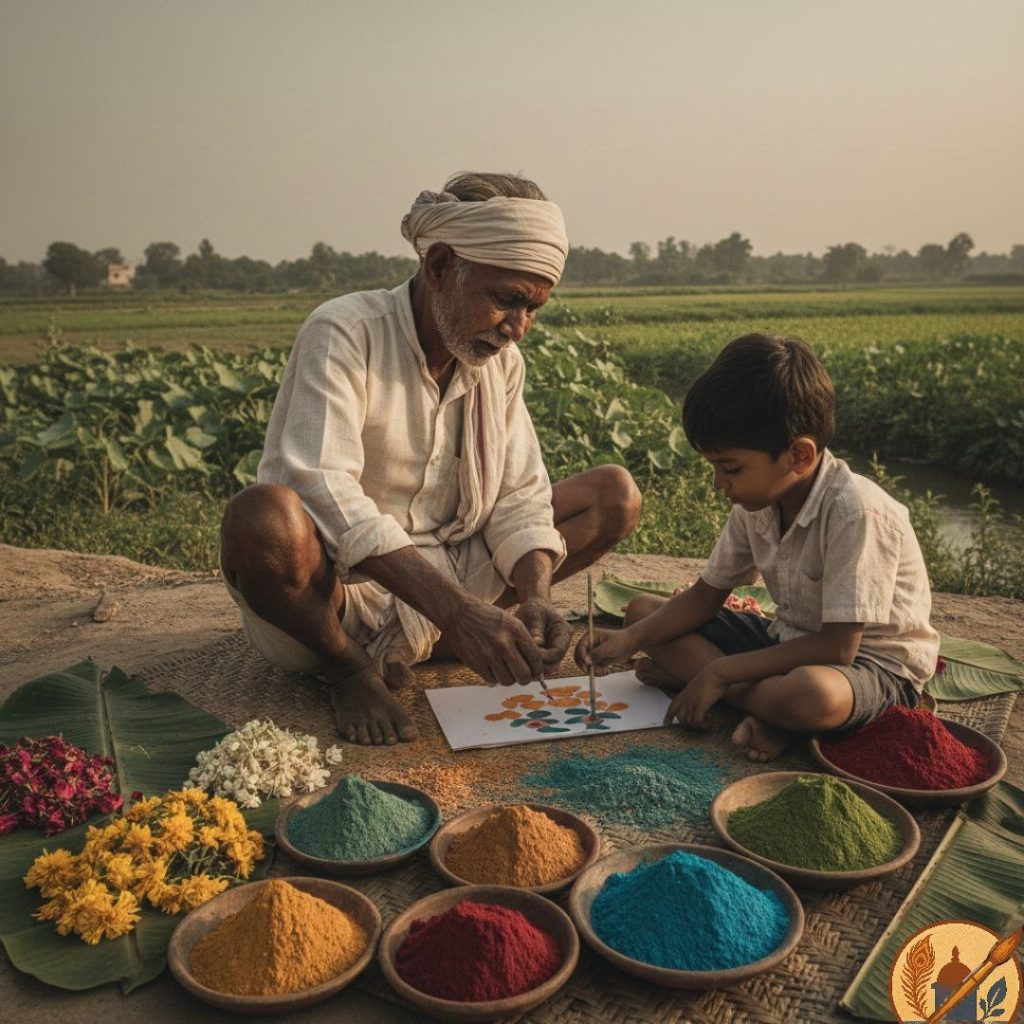
Vanishing Natural Pigments: Colors Lost to Climate Change
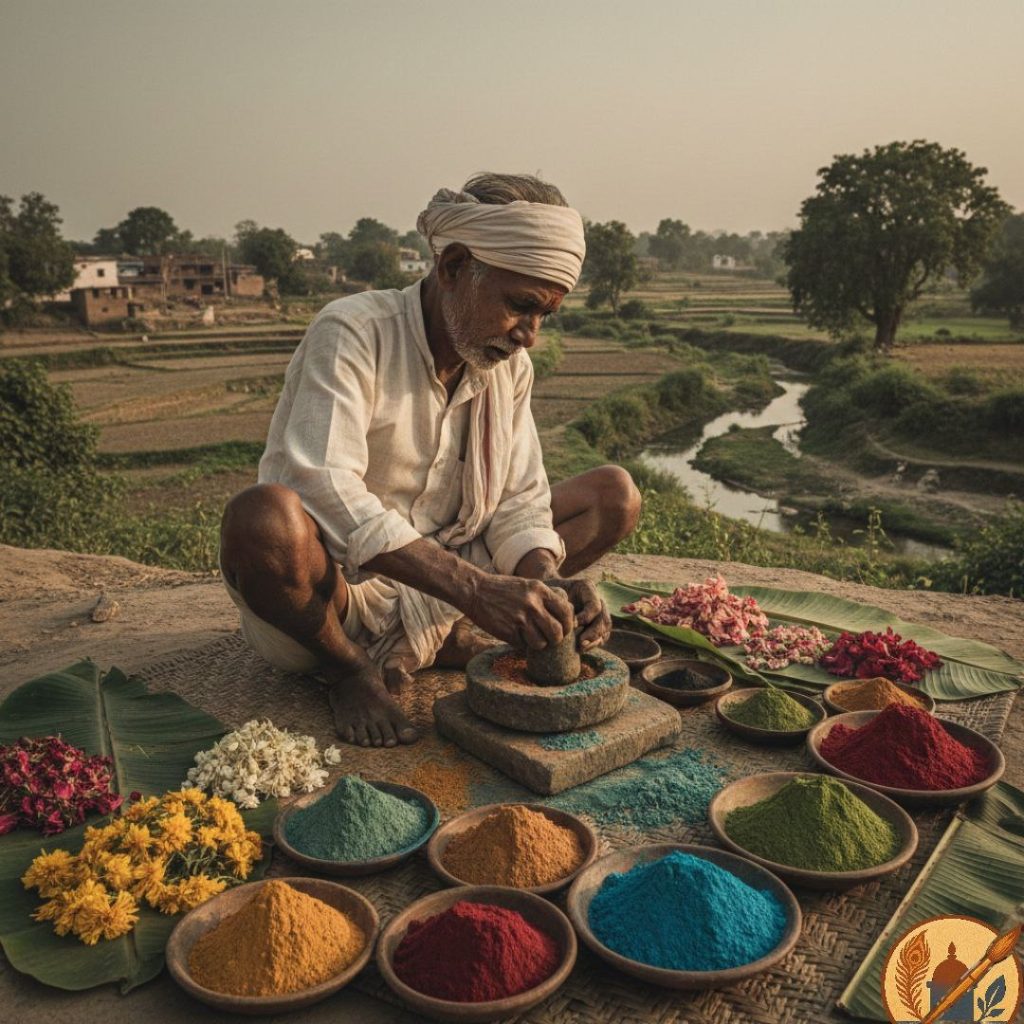
One of the clearest examples of the impact of climate change on India’s traditional art practices is the disappearance of natural pigments.
Art forms like Madhubani, Kalamkari, and Gond rely on:
- Indigo plants
- Turmeric and floral yellows
- Geru (iron-rich soil)
- Soot-based blacks
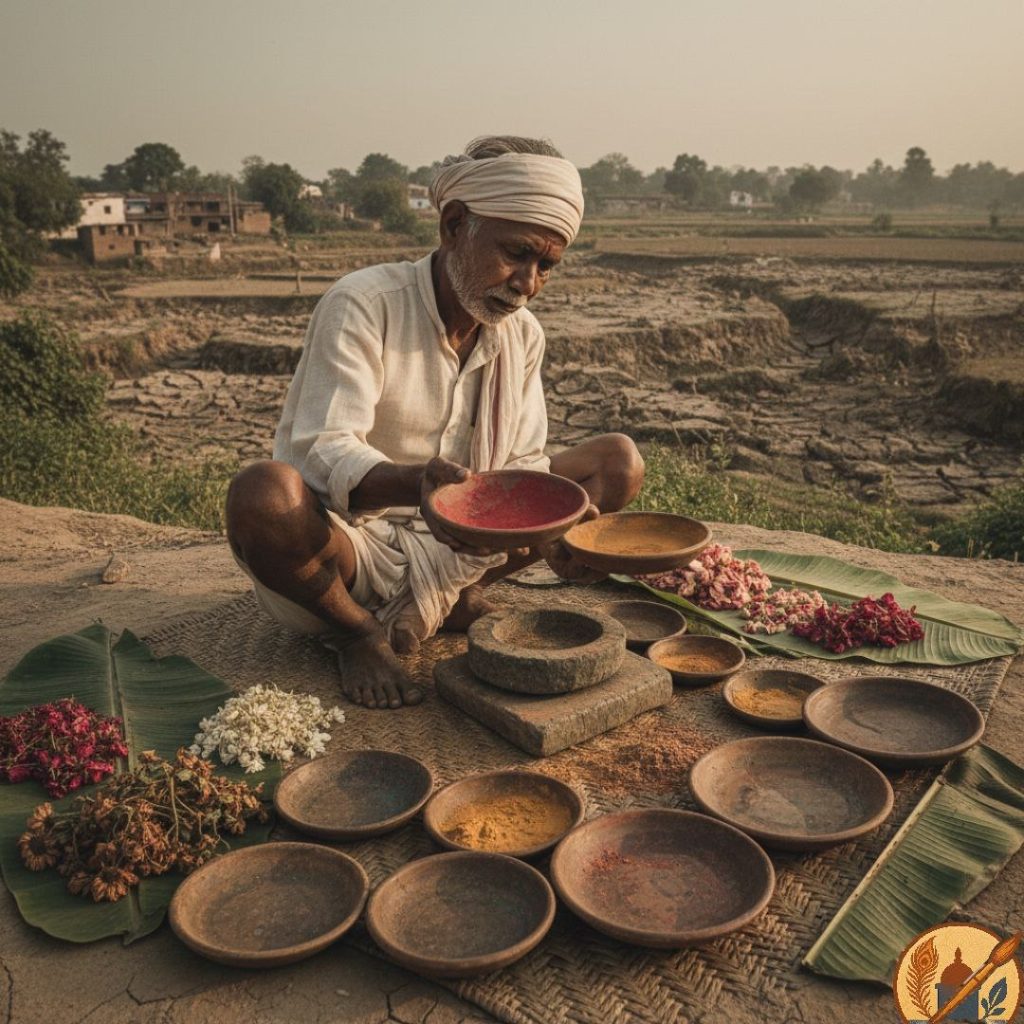
Rising temperatures, soil erosion, deforestation, and erratic rainfall have made these materials harder to source. Many pigment-producing plants now grow irregularly or not at all.
As a result, artisans are forced to use chemical substitutes—changing the texture, symbolism, and authenticity of the art.
According to UNESCO, loss of traditional raw materials is one of the biggest threats to indigenous art worldwide.
https://www.unesco.org/en/culture
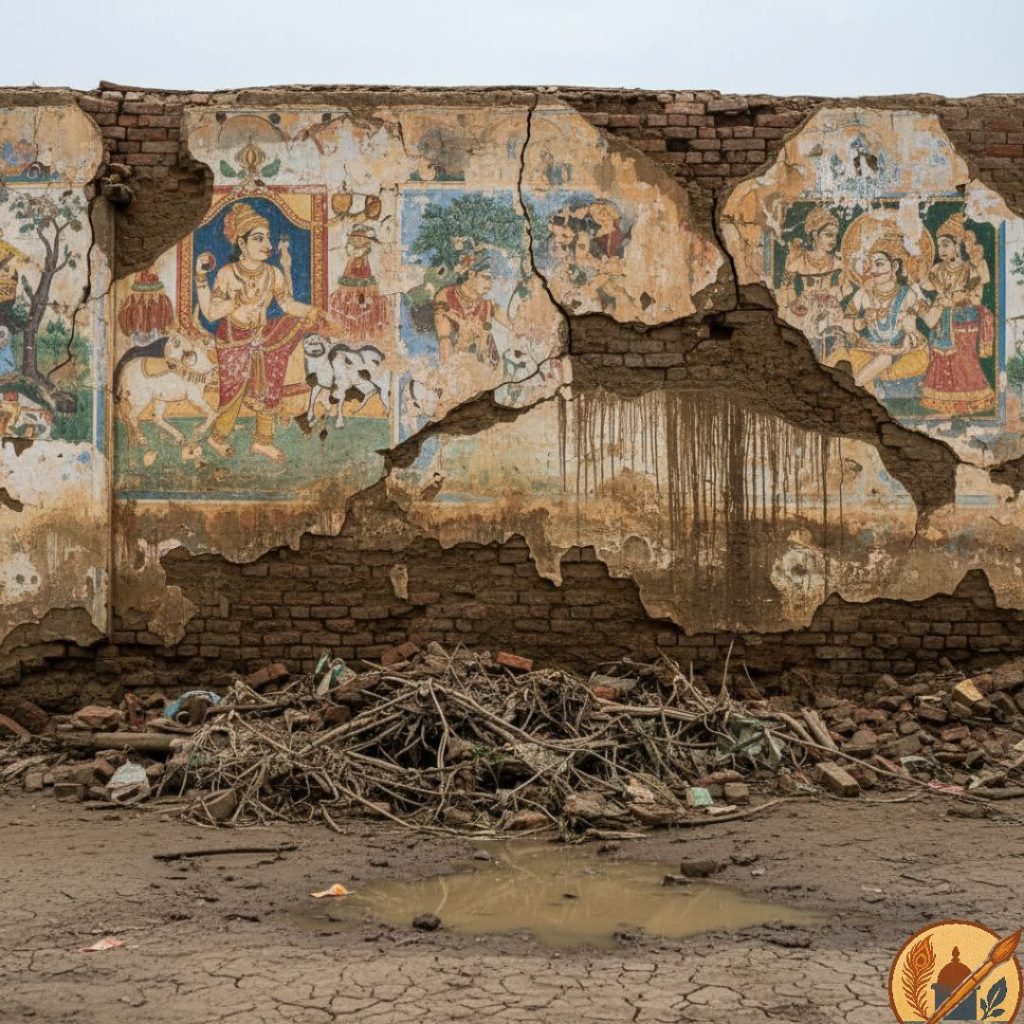
Floods, Cyclones, and the Destruction of Murals
The impact of climate change on India’s traditional art practices is most visible after extreme weather events.
Many Indian art forms are site-specific, painted on:
- Temple walls (Kerala murals)
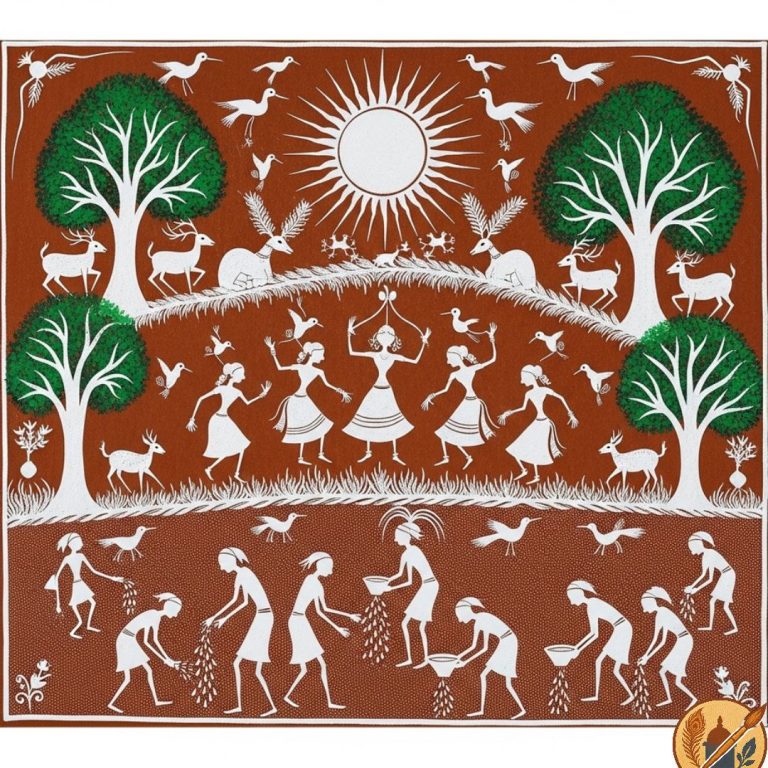
- Village homes (Warli, Sohrai)
- Community spaces
Floods, cyclones, and rising humidity cause:
- Paint layers to peel
- Fungal growth on murals
- Complete wall collapse
Once destroyed, these artworks cannot be relocated or recreated. Each loss is permanent.
Climate data from the IPCC confirms that South Asia will face more intense rainfall and cyclones in coming decades.
Impact of Climate Change on Artisan Livelihoods
Beyond art itself, the impact of climate change on India’s traditional art practices directly affects livelihoods.
Artisans face:
- Rising costs of natural materials
- Longer production cycles
- Rejection by buyers demanding “authentic” natural colors
Ironically, global demand for eco-friendly art is increasing, while climate change makes sustainable production nearly impossible.
Many artists abandon their craft for daily wage labor or urban migration.
You can explore similar artisan struggles in our article: https://www.thevanishingcanvas.com/exposed-why-indian-miniature-paintings-were-once-the-rage-in-mughal-rajput-courts-the-vanishing-canvas/

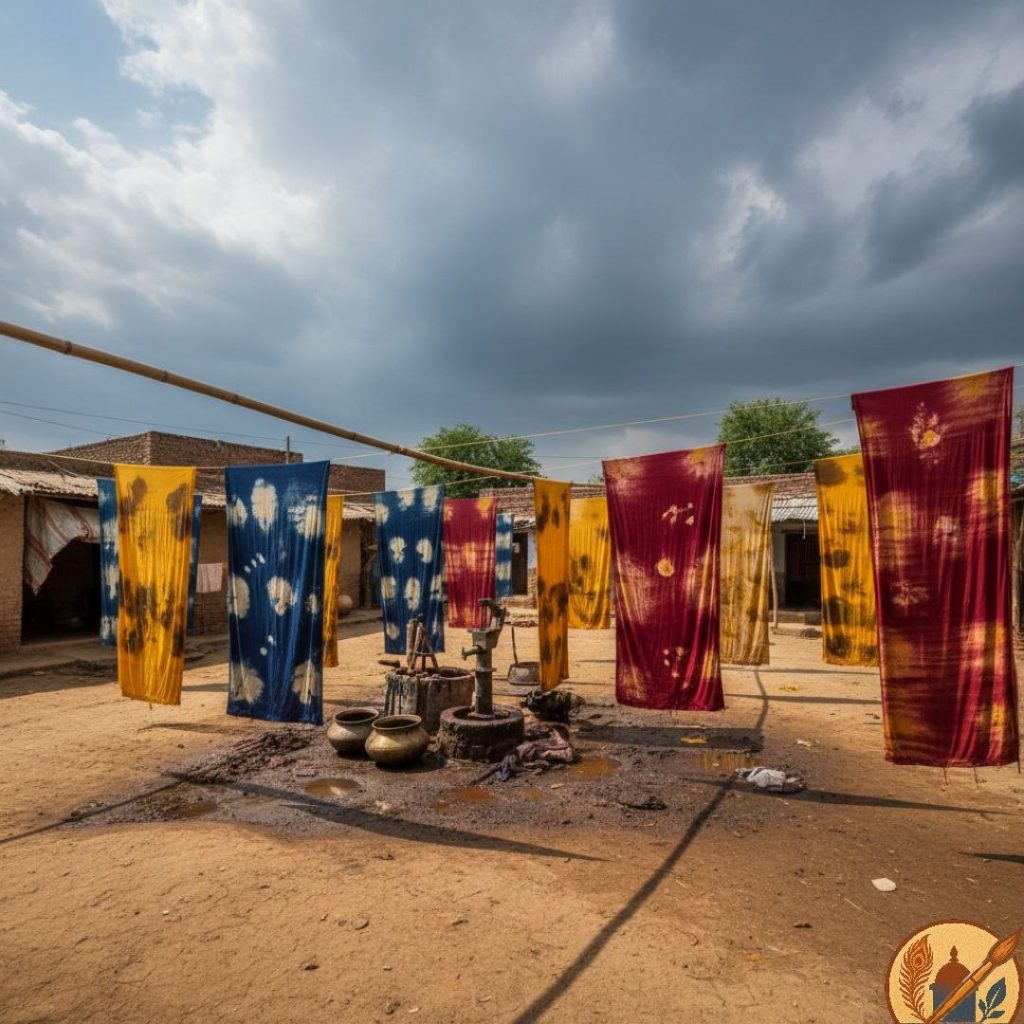
Textile Traditions Under Environmental Stress
Textile arts show another severe impact of climate change on India’s traditional art practices.
Arts like Ajrakh, Ikat, and handloom weaving depend on:
- Clean water
- Predictable drying conditions
- Natural dye cycles
Climate change has caused:
- Water scarcity in Kutch and Rajasthan
- Polluted rivers unsuitable for dyeing
- Inconsistent color results due to humidity
Master dyers now admit that some techniques can no longer be practiced year-round—a historic first.
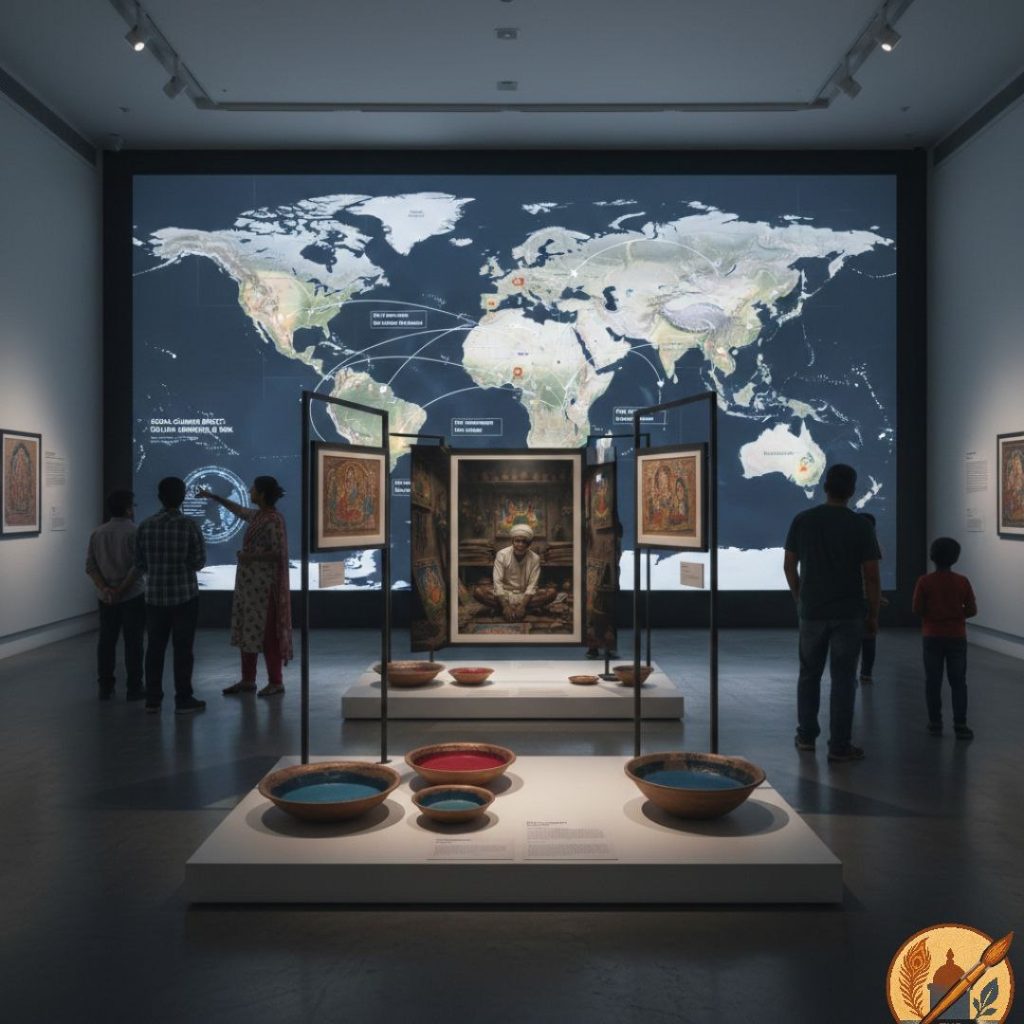
Global Perspective: A Cultural Crisis Beyond India
The impact of climate change on India’s traditional art practices is part of a global pattern.
Similar losses are seen in:
- Aboriginal art in Australia
- Native American pigment traditions
- African mural art affected by desertification
Museums worldwide display Indian art, but rarely acknowledge the environmental fragility behind it.
(Global ethics discussion referenced by The British Museum)https://www.britishmuseum.org/
Can India’s Traditional Art Survive Climate Change?
The future of Indian traditional art depends on how seriously we address the impact of climate change on India’s traditional art practices.
Possible solutions include:
- Climate-resilient pigment farming
- Government-supported material banks
- Ethical global trade models
- Digital documentation alongside living practice
Without urgent action, these art forms may survive only as museum artifacts—not as living traditions.
Conclusion: Climate Change Is Erasing Culture, Not Just Nature
The impact of climate change on India’s traditional art practices is not a future threat—it is already happening.
When pigments vanish, walls collapse, and artisans quit, we lose more than art.
We lose history, identity, and human creativity.
Protecting traditional art means protecting the ecosystems that sustain it.