
Introduction: A Canvas of Stories and Tradition
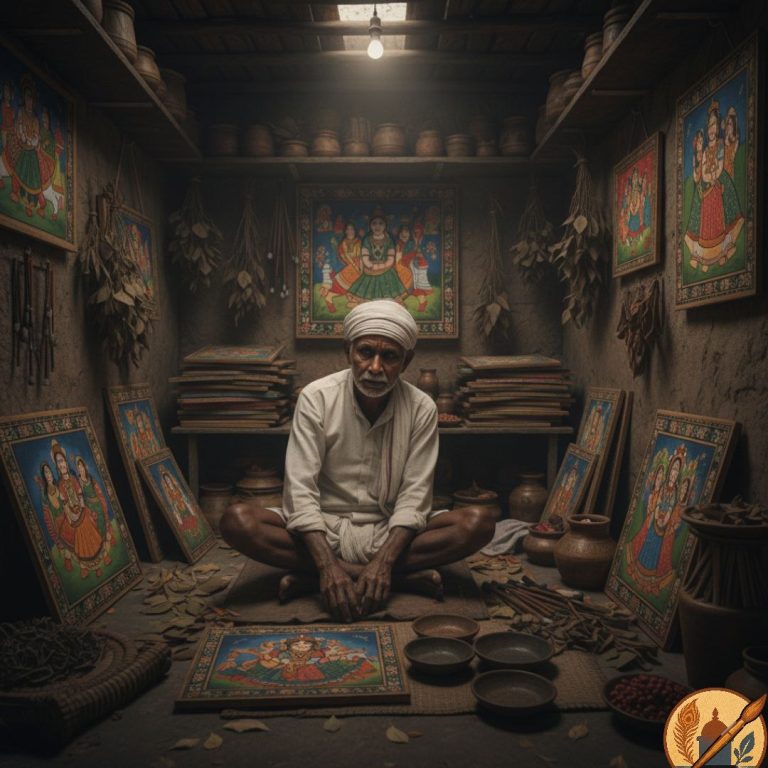
Kalamkari Art, an exquisite hand-painted or block-printed textile art form, is not just a craft—it is a cultural legacy that once flourished in the temples and courts of South India. Derived from the Persian words “kalam” (pen) and “kari” (craftsmanship), Kalamkari literally means “pen craft.” This ancient art has been practiced for over 3000 years, deeply rooted in storytelling traditions, particularly those surrounding Hindu mythology, epics, and folklore.
But as modern industrial textile production rises, Kalamkari risks fading into obscurity. Let us delve into its origins, techniques, global influence, and the urgent need to preserve this narrative-rich craft.

A Glimpse into the Past: Origins and History
Kalamkari developed in two prominent regions of Andhra Pradesh, each shaping a distinct tradition:
Srikalahasti Style: This temple-centered tradition, flourishing from the 15th century onwards, involves freehand pen-drawn depictions of Hindu mythology-particularly episodes from the Mahabharata, Ramayana, and Bhagavata Purana. Artisans often worked as temple painters, supported by kings and priests.
Machilipatnam Style: Situated near the coastal trading hub, this style evolved under Mughal and Golconda Sultanate patronage. Using hand-carved wooden blocks, artisans produced textiles with Persian floral patterns and Islamic design aesthetics, often for export via the Coromandel Coast to Europe and Southeast Asia as early as the 17th century, as noted in Dutch and Portuguese trade records.

These two schools together formed the foundation of Kalamkari as both an art form and a medium for visual storytelling, used by temple bards (called chitrakars) and religious performers.
The Craftsmanship: A Meticulous Process Rooted in Nature
A single Kalamkari cloth goes through over 23 stages of preparation, still preserved by artisans in villages like Pedana and Srikalahasti:

Washing the cotton fabric with river water to remove starch,
Soaking it in buffalo milk and myrobalan to ensure color absorption,
Outlining drawings with tamarind seed ink using a bamboo kalam,
Applying natural dyes derived from indigo (blue), pomegranate peels (yellow), iron rust (black), alum (red), and more,
Each color requires a separate washing and dyeing stage. For example, natural red is produced by treating the fabric with alum, then boiling it with madder root. The entire process is handcrafted, sustainable, and deeply ritualistic—often taking weeks to complete.
How Kalamkari Knowledge Was Lost Over Time
By the mid-19th century, as British colonial policies favored industrially manufactured textiles, Kalamkari suffered a sharp decline:

- The rise of British machine-made textiles
- Lack of royal patronage
- Shifting market demands and rapid urbanization
- Diminished interest from younger generations
- The influx of cheap Manchester-made prints replaced handmade cloths
- The traditional guru-shishya system (master-disciple training) began to erode
Revival efforts in post-independence India, especially from the All India Handicrafts Board (1952) and designers like Kamaladevi Chattopadhyay, have helped retain fragments of this heritage,
Despite a revival movement post-independence led by organizations like the All India Handicrafts Board and support from NGOs, much of the traditional storytelling knowledge and dye recipes remain endangered today.
Kalamkari Goes Global: From Indian Temples to Western Runways
Though its roots are deeply Indian, Kalamkari has gained international recognition:
In the UK: British textile collectors during the colonial period, such as John Forbes Watson, documented Kalamkari in their extensive textile surveys. Today, London’s Victoria and Albert Museum holds rare 17th–18th century Kalamkari chintz used for curtains and furnishings in aristocratic homes.

In the USA: The popularity of boho-chic and ethnic prints has revived interest in Kalamkari. Designers like Donna Karan and Ralph Lauren have referenced its motifs in their collections. The Metropolitan Museum of Art (New York) has displayed Kalamkari pieces in exhibitions on global trade and Indo-European artistic exchange.

Middle East and Southeast Asia: Historically, Kalamkari textiles were widely traded to Java, Iran, and the Ottoman Empire. In Indonesia, local batik patterns were heavily influenced by Kalamkari, known there as kain chintz.

Eco-Fashion Movement: As climate consciousness grows, Kalamkari’s organic materials, zero plastic footprint, and chemical-free dyes make it a beacon for global sustainability campaigns.

International Exhibitions & Collaborations: Contemporary artists and fashion houses in Paris, New York, and Tokyo have collaborated with Indian Kalamkari artisans to create globally appreciated collections.
Institutions like UNESCO have recognized Kalamkari under its intangible cultural heritage framework, and brands like FabIndia and Anokhi have worked with artisans to create export-quality Kalamkari fashion lines.

This global journey shows that while Kalamkari may be endangered, its value is not forgotten—it is admired for its ethics, aesthetics, and history.
Modern Usage and Cultural Relevance Today
Today, Kalamkari is being repurposed for:

- Sarees, dupattas, and kurtas in Indian fashion
- Eco-friendly home décor: bedsheets, lampshades, wall hangings
- Stationery and artwork, even contemporary storytelling media
- Fashion designers are blending Kalamkari motifs with modern silhouettes, making it relevant for younger audiences while keeping the traditional spirit alive.
- Digital Resurrection: Indian startups and Instagram boutiques are using digital storytelling to bring visibility to Kalamkari artisans and their life stories.
The Artisan’s Voice: Stories from the Ground
Master craftsman Sri Bhaskar Reddy from Srikalahasti shared in an interview with The Hindu:
“Each line I draw is a prayer, each color a memory. We don’t just paint, we tell stories handed down for generations.”

Artisans like him are struggling against fast fashion and digital prints. But their skill and cultural responsibility keep them going, hoping the world will recognize the importance of heritage over convenience.
Why Kalamkari Matters in 2025 and Beyond
Preserving Kalamkari is about:

- Honoring India’s intangible cultural heritage
- Supporting rural artisan economies
- Encouraging slow fashion and sustainability
- Reviving indigenous storytelling traditions
Its survival depends on informed consumers, educational awareness, and government plus international support.
Conclusion: A Revival in Progress
Kalamkari is not just about colors and cloth—it is a visual script of India’s past. In today’s fast-paced, disposable world, this art reminds us of slow, meaningful creation. With renewed interest both in India and abroad, Kalamkari is on the brink of a revival-but only if we consciously support it.

Let’s not let these painted stories vanish. Let The Vanishing Canvas be the platform where such arts are rediscovered, respected, and revived.